











Identity that is secure by default
Security-first IAM: no passwords required and strong MFA everywhere, by default and at no additional cost.
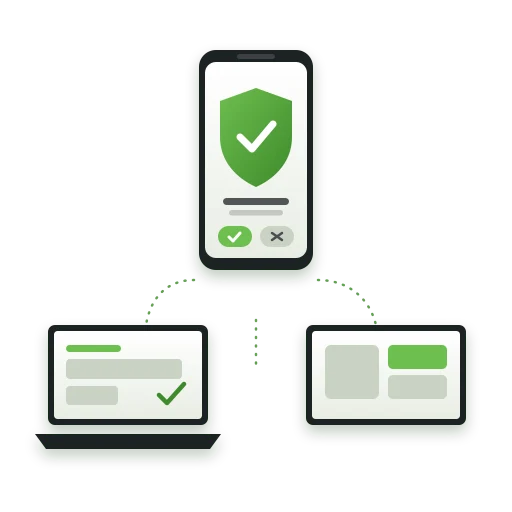
Cisco Duo IAM is an identity and access management platform that is secure by default: no passwords, strong MFA everywhere and no additional cost for security. You can run it as a standalone identity provider, directory and SSO, as an identity broker over an existing Entra, Okta, Ping or Active Directory, or as a separate directory for third parties such as contractors and vendors.
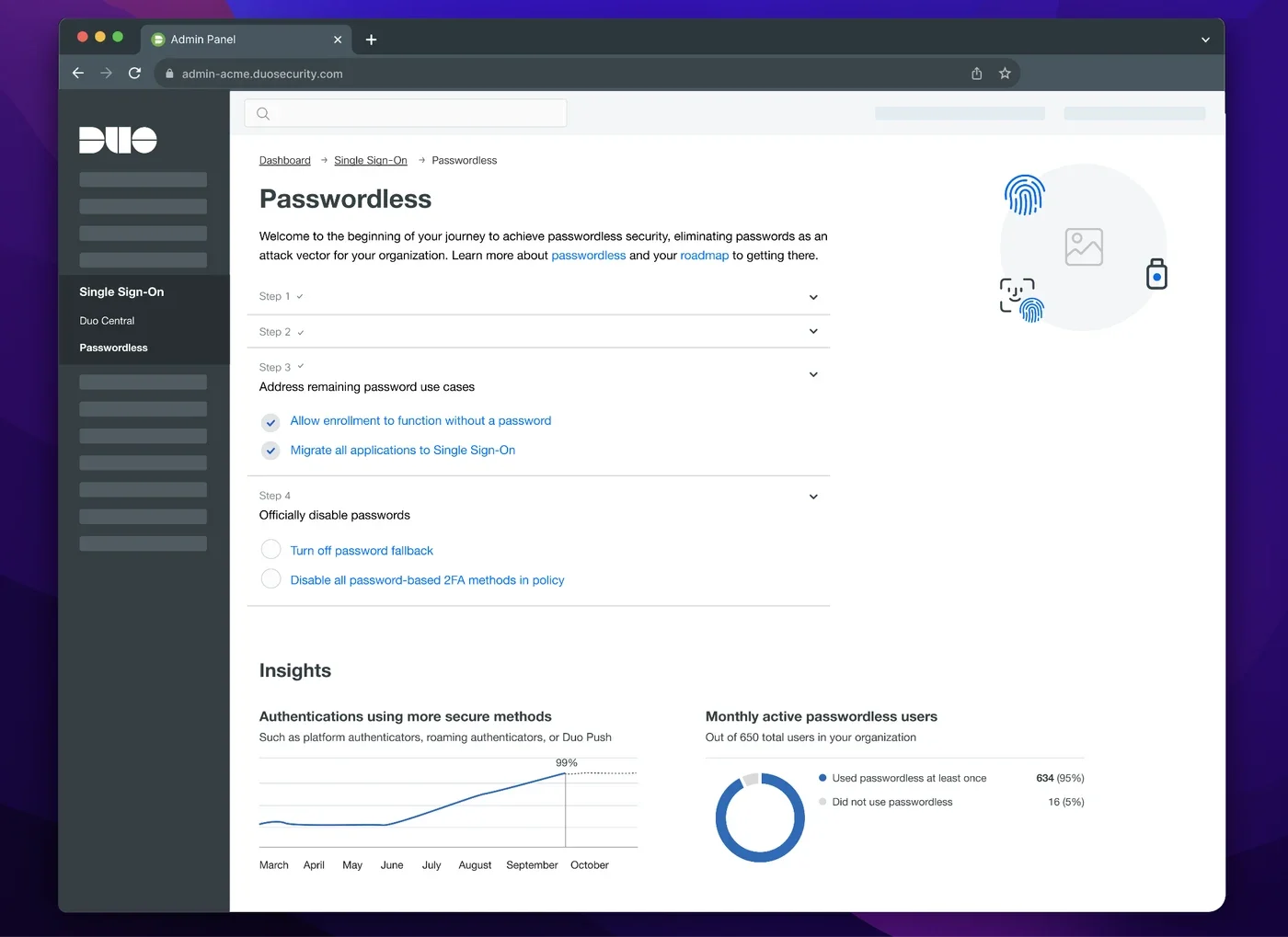
A dashboard that guides the move: allowing enrollment without a password, migrating apps to SSO and officially turning passwords off, with insights on authentications by more secure methods and on passwordless users.
Security-first IAM: no passwords required and strong MFA everywhere, by default and at no additional cost.
Phishing-resistant authentication at OS login, app login, enrollment and the help desk, and session theft protection in the middle of the session.
Identity Intelligence unifies data from separate identity tools into one graph, to find MFA gaps, excessive privilege and dormant accounts.
Authenticate once, sign in smoothly to apps and the network, and privacy-preserving re-authentication: frustrating attackers, not users.
Routing rules decide by condition which authentication source is used: for example Duo for contractors and Active Directory for employees.
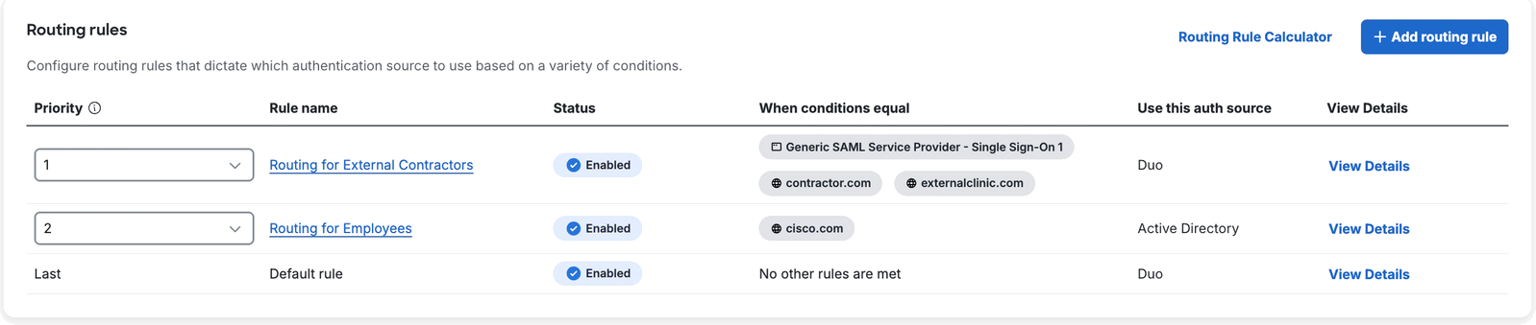
A standalone identity provider, directory and SSO, or an identity broker over an existing IAM, with strong MFA everywhere.
Phishing-resistant authentication at OS login and app login, in enrollment and at the help desk, and protection from session theft mid-session.
An identity graph that unifies data from separate tools, to find MFA gaps, excessive privilege and dormant accounts.
Discovery of AI agents and tools, an agent directory, human accountability and lifecycle management, with just enough access for just long enough.
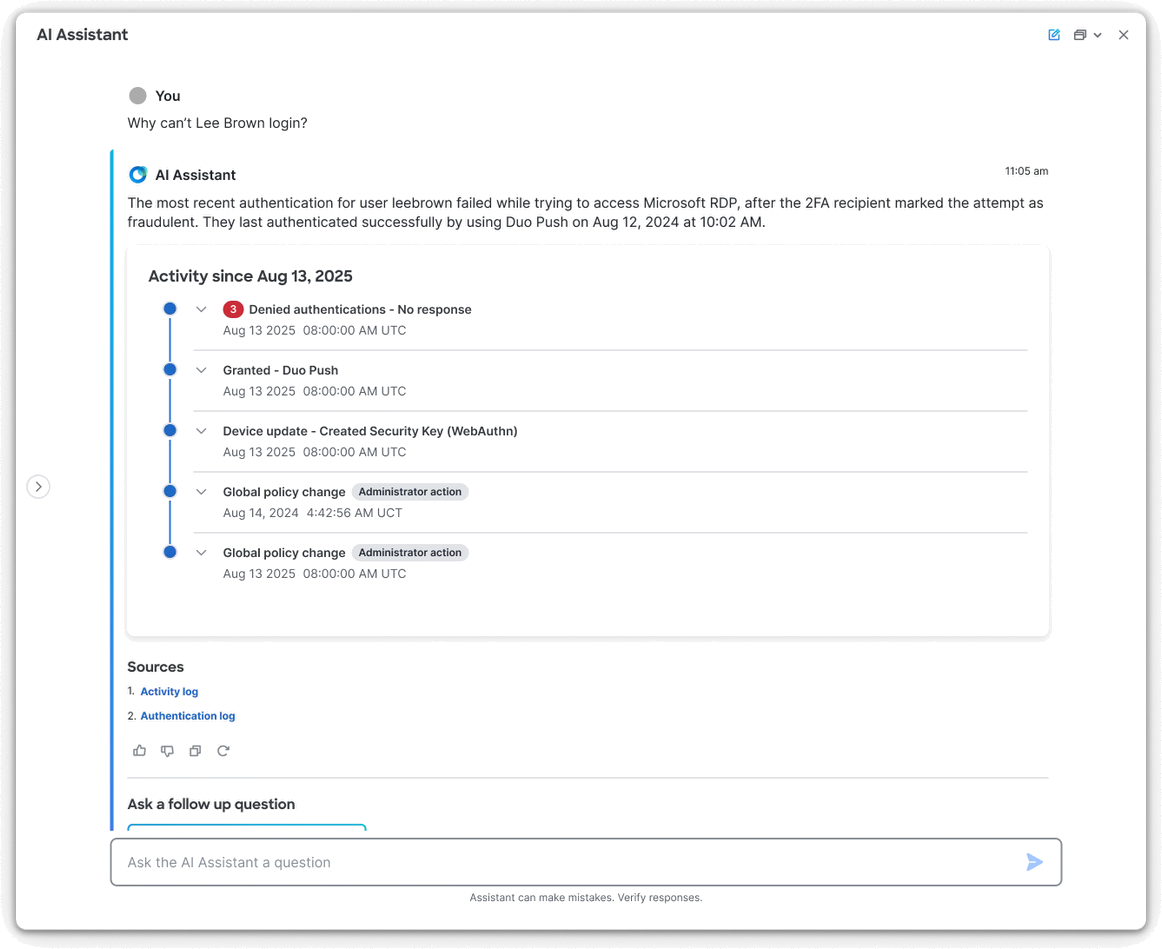
An AI assistant for administrators: it simplifies configuration, helps set effective policy and speeds up the help desk, with a timeline of events and sources.
Mapping applications, user groups (employees, contractors and vendors), existing identity systems and authentication methods.
Choosing a deployment model: standalone, a broker over an existing IAM or a separate directory for third parties, and defining phishing-resistant policy.
Connecting applications and systems, running a pilot on one group and moving to passwordless in stages.
Ongoing support, policy updates and analysis of access events.
A separate directory for external identities that must be managed and secured separately, with routing rules that decide who authenticates each user.
Rolling out FIDO2 keys, migrating from Active Directory or a legacy SSO to the cloud, and replacing an existing IAM solution.
Turning AI agents into managed identities: discovery, human ownership and least-privilege access as needed.
Cisco's identity and access management platform that is secure by default. It can serve as an identity provider, directory and SSO, as a broker over an existing IAM, or as a separate directory for third parties.
Attackers expect MFA and bypass it: phishing through a proxy, stolen session cookies, falling back to a weaker method and impersonation of the help desk. That is why Duo protects every stage, from OS login to the middle of the session.
A capability for managing AI agents as identities: discovery of agents and tools, an agent directory, human accountability, lifecycle management and fine-grained access policy, so an agent gets just enough access for just long enough.
Yes. Duo can act as an identity broker over the existing IAM, so you can start with phishing-resistant authentication and visibility without replacing the system.
An identity graph that unifies data from separate tools and shows relationships and activity. It is used to find MFA gaps, remove excessive privilege and close dormant accounts, and supports ISPM and ITDR.
An AI assistant for administrators that simplifies configuration, helps set effective policy and speeds up the help desk, for example by explaining why a particular user could not sign in.
We'd be glad to review with you which parts of your information systems are ready for an upgrade, and to propose technology solutions backed by decades of hands-on field experience.
Book a meeting