











Full ownership and visibility
One view of all cloud and AI spend, 100% of costs allocated by team, product and initiative, and personalized views for every role.
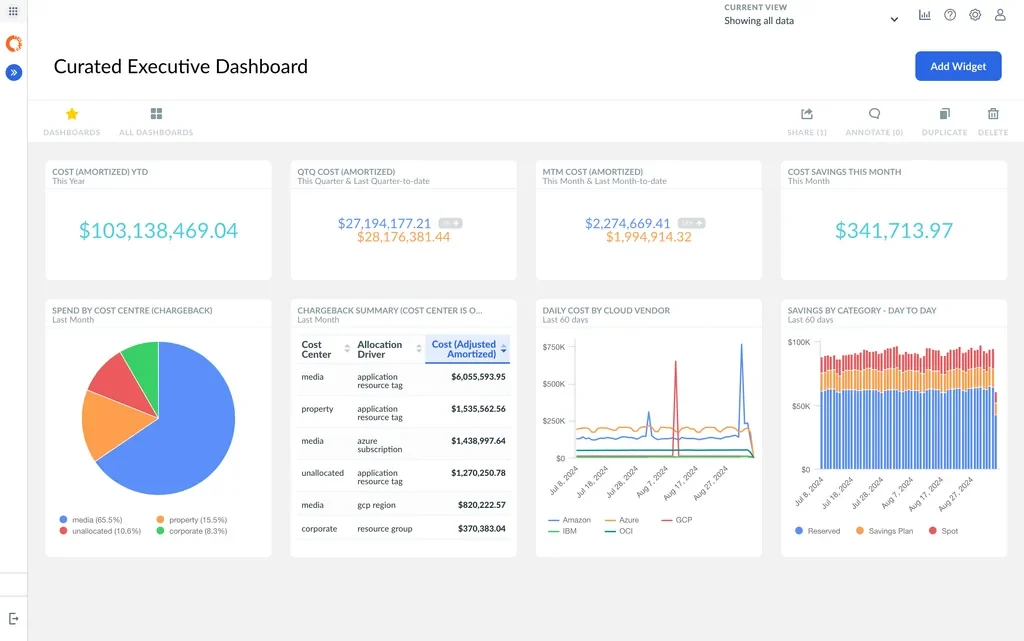
Cloudability is an enterprise FinOps platform from Apptio, now an IBM company. It gives one view of all spend on cloud, AI and SaaS, ties every cost to an owner, improves forecasting and offers recommendations and automation that cut waste. Teams spend less time reconciling bills and chasing anomalies, and more time acting.
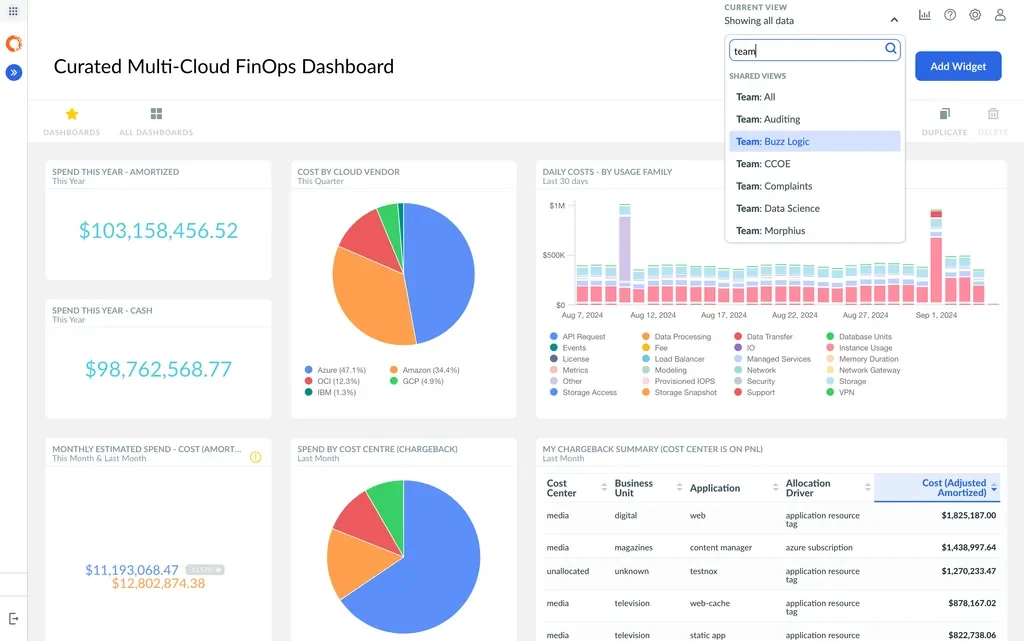
One view of all cloud and AI spend, 100% of costs allocated by team, product and initiative, and personalized views for every role.
Unit economics, forecasts, budgets and anomaly alerts let you make growth decisions based on data.
Recommendations and automation that improve commitment coverage and cut waste, so the savings last beyond the first round.
Inputs from other data sources such as Jira, Datadog and PagerDuty, and rules that open tickets in your ITSM tools.
Cost allocation for 100% of usage, Cost Sharing, Chargeback and Showback by team, product and initiative.
Cost per product or app in near real time, forecasts, budgets and cloud financial planning.
Resizing resources by utilization, removing orphaned resources and managing commitment coverage and discounts.
Policies, scorecards and alerts on budget breaches, before they turn into an invoice.
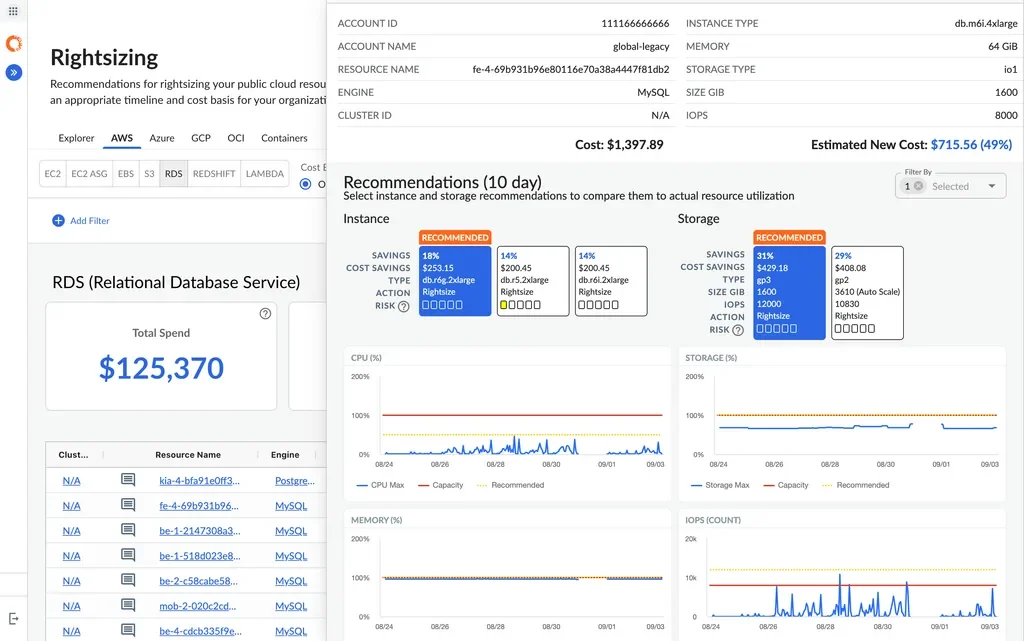
The Rightsizing screen in Cloudability shows savings recommendations, for example on database costs.
Three domains that cover the whole cycle of managing spend, from ownership to lasting efficiency.
One view of all cloud and AI spend, 100% cost allocation and personalized views for every team. Includes Business Mapping, Commercial Billing, container cost allocation, Cost Sharing, Tagging, True Cost Explorer and Sustainability.
Unit economics, forecasts and budgets, and anomaly alerts that surface risk early. Includes Cloud Financial Planning, Workload Planning, Scorecards and Governance.
Automation, insights and governance that reduce waste and improve commitment effectiveness. Includes Rightsizing, Commitment-Based Discounts and Workload Planning.
The packages fit every stage of the FinOps journey, and you can move up as the practice matures.
For enterprises establishing FinOps fundamentals: multi-cloud cost visibility, rightsizing and an understanding of cloud usage and cost.
For teams advancing their capabilities: adds unit economics, total cloud program cost allocation, cloud financial planning and workload planning to Essentials.
For enterprises that need one common data source for cross-functional FinOps teams, with advanced optimization capabilities and extended automation.
Mapping cloud accounts and AI services, the organization structure and who owns each cost.
Defining the allocation model, views, budgets and policies by role.
Connecting the cloud providers and existing tools, and setting up dashboards and alerts.
Ongoing support, following up on savings recommendations and tuning the metrics to your needs.
Charging teams and business units by actual usage, with shared costs split between them.
Tracking AI usage by model, token type and direction, next to cloud spend.
Planning commitment coverage, utilization and waste, and data for negotiating with vendors.
FinOps is a way of working that brings finance, IT and engineering together to manage cloud and AI costs by business value. Cloudability gives that practice its tools: allocation, forecasts, recommendations and automation.
FinOps practitioners, DevOps, IT finance, product, leadership and procurement. Each role has its own views and metrics, for example Rightsizing for DevOps, Chargeback for IT finance and negotiation data for procurement.
Yes. Cloudability shows AI usage by model, token type and direction, next to cloud and SaaS spend, so you see the real cost of every AI initiative.
It recommends resizing resources by utilization, finds orphaned resources, manages commitment coverage and discounts, and supports policies that automatically open tickets in your ITSM tools.
Yes. It takes data from other sources such as Jira, Datadog and PagerDuty, and also covers container and Kubernetes costs.
Essentials covers the FinOps fundamentals, Standard adds unit economics, full cost allocation and financial planning, and Premium adds one common data source for teams, advanced optimization and extended automation.
We'd be glad to review with you which parts of your information systems are ready for an upgrade, and to propose technology solutions backed by decades of hands-on field experience.
Book a meeting