







Ransomware protection
Structural separation that isolates the deep storage tier from the corporate network.
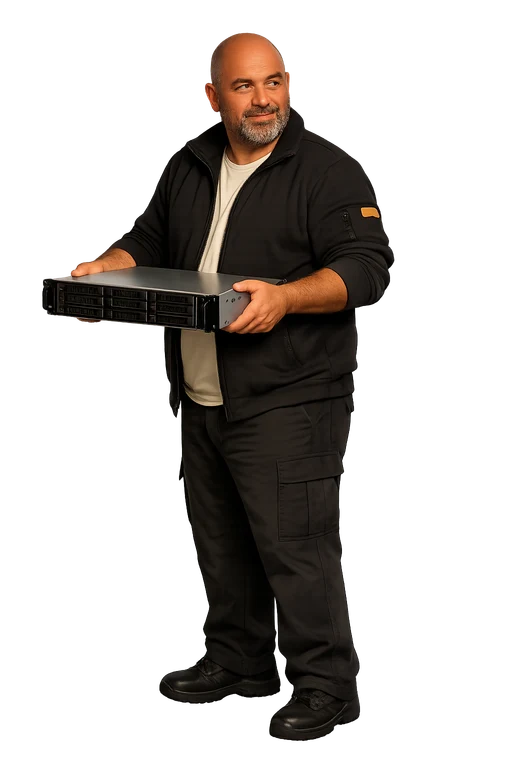
A backup storage platform built on a two-tier Tiered Backup architecture. It pairs a Landing Zone for fast writes and restores with an isolated Repository Tier for long-term storage. The solution includes Air Gap mechanisms and protects backups from deletion or encryption in a ransomware attack.
Structural separation that isolates the deep storage tier from the corporate network.
A Landing Zone gives immediate access to data without opening compressed files.
High-resolution Adaptive Deduplication saves storage space.
Scale-Out architecture adds compute and storage without lengthening the backup window.
Direct-to-disk writes with no preprocessing, for fast restores without Rehydration.
A network-isolated tier that stores deduplicated, compressed data for long-term retention.
A delayed-deletion mechanism that prevents data loss from hostile activity or human error.
Compression and data reduction run in the background, without loading the real-time backup.
The system supports a wide range of applications and lets you run several backup methods side by side in the same environment, protecting your existing investment.
Defining the backup windows, storage volumes and Retention requirements of the organization.
Setting the Scale-Out architecture and defining the Air Gap and ransomware protection policy.
Installing the systems and integrating with the existing backup applications, such as Veeam or Commvault.
A dedicated Level 2 engineer and continuous technical support over time.
Fast data recovery from the protected, isolated Repository Tier.
Keep historical backups on disk at high efficiency, thanks to an improved compression ratio.
Keep backup times from growing in expanding enterprises by adding processing units.
It uses an Air Gap architecture between the Landing Zone and the Repository Tier. The deep tier is network-isolated and cannot be reached directly from the corporate network, which makes the data Immutable.
The Landing Zone keeps the latest backups in their original form. This lets you restore files and start virtual machines (Instant VM Recovery) at direct-from-disk read speed, with no Rehydration.
With Scale-Out, every unit you add brings its own storage capacity, memory, bandwidth and compute. Backup performance stays constant as data volume grows, with no Forklift upgrades.
Yes. It uses the Deduplication of software such as Veeam or Commvault and adds an Adaptive Deduplication layer on top. The result is a higher compression ratio and additional storage savings.
The Retention Time-Lock mechanism delays deletions for up to 30 days. Even if a delete command arrives from the backup application, the data stays in the protected tier and you can return to a healthy point in time before the deletion.
We'd be glad to review with you which parts of your information systems are ready for an upgrade, and to propose technology solutions backed by decades of hands-on field experience.
Book a meeting