











Integrations that break
An integration written in code is code someone has to maintain. Any change in a system API can stop the agent.
An AI agent that can talk to your organization is only the start. The value comes when AI agents carry out a task end to end inside the ERP and CRM, with defined permissions, human approval where needed and a record of every action. We implement that layer.
Connecting an AI agent to one tool is easy. Letting it write to the ERP without losing control is hard, and the risk grows with every system the agent can reach.
An integration written in code is code someone has to maintain. Any change in a system API can stop the agent.
An agent with broad access can update records without permission, and nobody can prove afterwards what happened. That is the first question security will ask.
Libraries built to make an API call were not built to enforce who may make it. Role-based access, multi-round approval chains and an audit trail have to be the architecture, not an add-on.
We start with the process itself: what the agent has to do, in which systems and with which permissions. Then we define the control rules.
Engini sits between the agents and your ERP, CRM and legacy systems. Every call is checked against the agent's permissions and logged.
Instead of a chain of scripts that each engineer maintains separately, cross-system orchestration runs on one governed platform. The agent finishes the task, exceptions included, instead of stopping at the first mismatch.
The same permissions and the same audit trail apply to finance, sales and HR, for example employee onboarding and access provisioning, no matter who triggers the process.
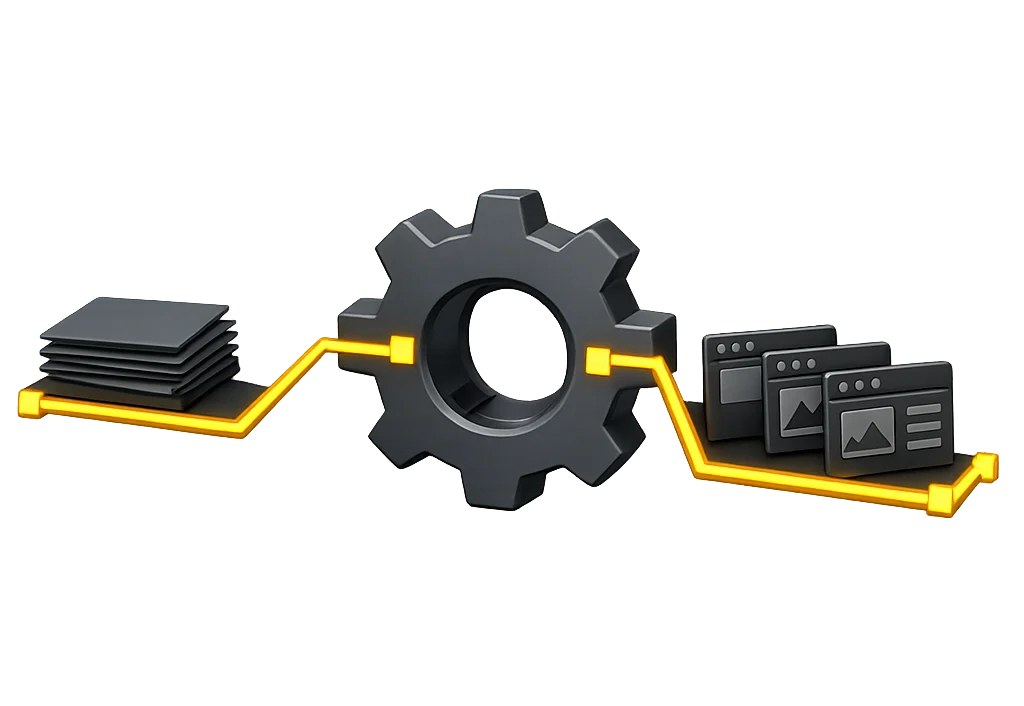
Every process goes through four governed steps, not a single script reacting to one trigger.
The gateway ingests Webhooks, REST and GraphQL calls and even unstructured emails through the Model Context Protocol (MCP), and normalizes every trigger regardless of the source system.
Before any action, the permissions of the requesting agent are checked, and fields are mapped dynamically against the changing structures of SAP or NetSuite.
Agents carry out the cross-system action under runtime guardrails. Anything outside tolerance is routed to an employee for approval instead of failing silently.
The verified result is written directly back to SAP or NetSuite, with a full audit log that meets SOC 2 and GDPR evidence requirements.
Engini is the operating layer under AI workers: a governed gateway, process orchestration and permissions in one place.
A governed gateway for AI agents and no-code process automation on the same connections: a toolset per agent, approval rules and a log of every call, over ERP, CRM and on-premises systems.
To the platform page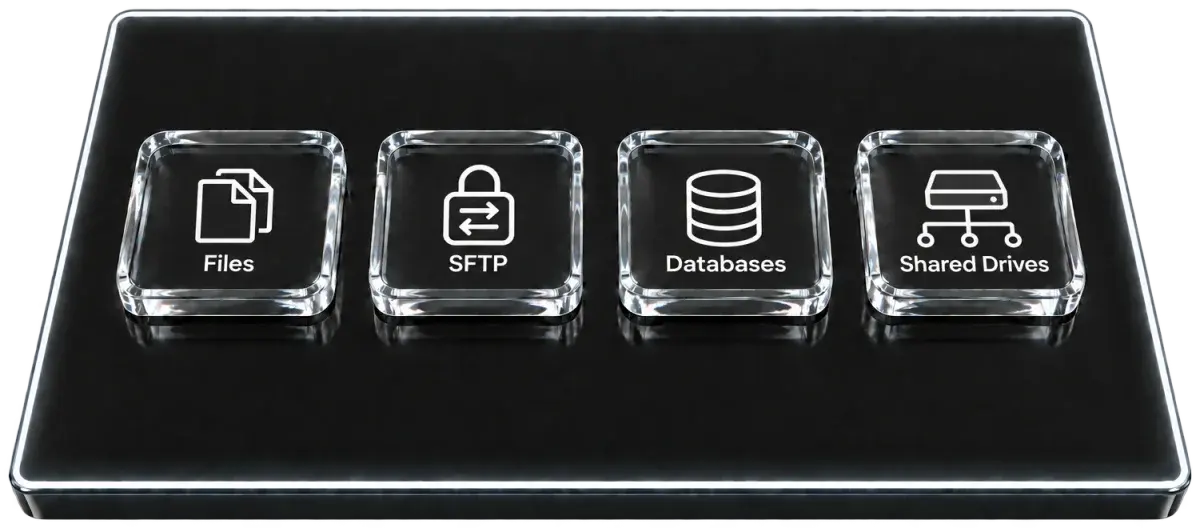
An integration library wraps API calls that a developer invokes one at a time. A gateway adds a permission check, exception handling and a log around every action, and writes to core systems in a controlled way.
No. In Engini you build and change processes on a visual canvas or by describing them in chat, and systems are connected through ready connectors, APIs and Webhooks. Every process has versions and rollback.
It turns cross-system orchestration into one governed platform instead of a chain of scripts each engineer maintains separately. Engini customers describe finance and operations teams moving from 80% manual re-keying toward 80% strategic work, because the gateway absorbs the integration work a developer used to own.
You do. Each agent has a defined toolset, every call is written to a log you can export, and passwords are never exposed to the agent. Sensitive actions, by amount, system or type, pause and wait for an employee's approval.
Any agent that speaks MCP or works through the SDK and REST API, such as Claude, ChatGPT and Cursor, depending on what your organization chooses. You can swap a model without rebuilding the connections.
Yes. The same permissions and audit trail apply to every department, so processes such as employee onboarding and access provisioning run the same way.
We'd be glad to review with you which parts of your information systems are ready for an upgrade, and to propose technology solutions backed by decades of hands-on field experience.
Book a meeting